Just Plain Interesting
I’m between research projects, but have picked up a lot of interesting photos the last few weeks. I couldn’t find info on most of these photos, but there’s still some pics with a story or two between the purely visual photos.

I got nothing on this pic of piggybacks other than loaded “Flatbeds on flatcars”.

Here’s a pic of an early piggyback project that was developed between 1940 and 1957. These flats had an outside frame similar to a drop end gondola without the panels. On closer look, the color photo is a prototype pic while the black and white photo is a scale model! (That’s kinda reversed – isn’t it? At least I know we can purchase a car or two for the CNor!)

Couldn’t find much on this other than it’s early Canadian National piggyback terminal.

Zero on this pic – But check out the portable conveyor that allows the crew to slide the boxes to the guy loading the car. That would be an interesting feature to model near a dock door. I also like the motorized vehicle use to pull a wheeled flat-cart stacked with boxes. There’s quite a few of those carts visible in the pic.

…an icing platform – that’s it!
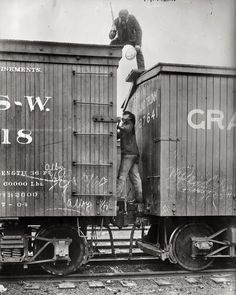
This pic caught my eye. Both of these boxcars are wood with archbar trucks – so likely turn of the century. Notice the height difference between the two cars. Just before the turn of the century up to the use of steel panels rather than wood sides, there was quite an evolution in boxcars where length, height, and load capability all increased significantly. Most of the increases were due to steel frames rather than wood frames. The two items that caught my eye: Imagine running the top of the train with running board height differences like this! And, check out the graffiti – who said graffiti on cars started in the ‘50s?
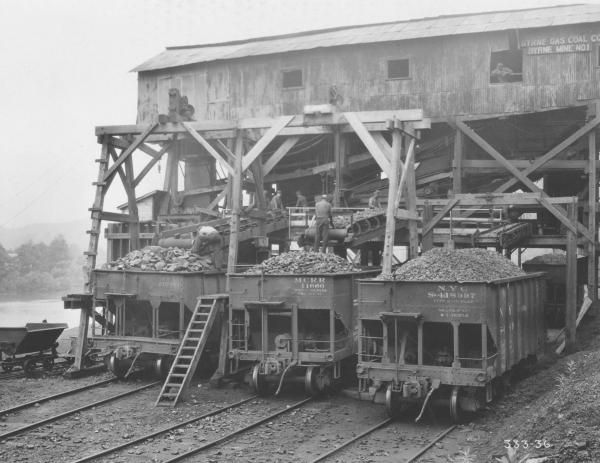
I assume these are coal loads. Note how the different grades come from different chutes.
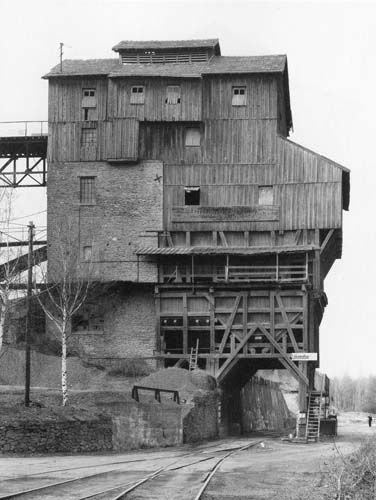
Here’s a coal or ore tipple

This is a coal processing plant. Again, the different chutes (spur tracks) were probably for different grades of coal.

Going back to flatcar loads, this bin looks like it could be for a long dump truck…but, just not sure! The pic was among pics of the WWII era. Any chance this might be a landing craft?
Editors Note: That indeed is a Higgins boat. The landing craft of choice in WW II
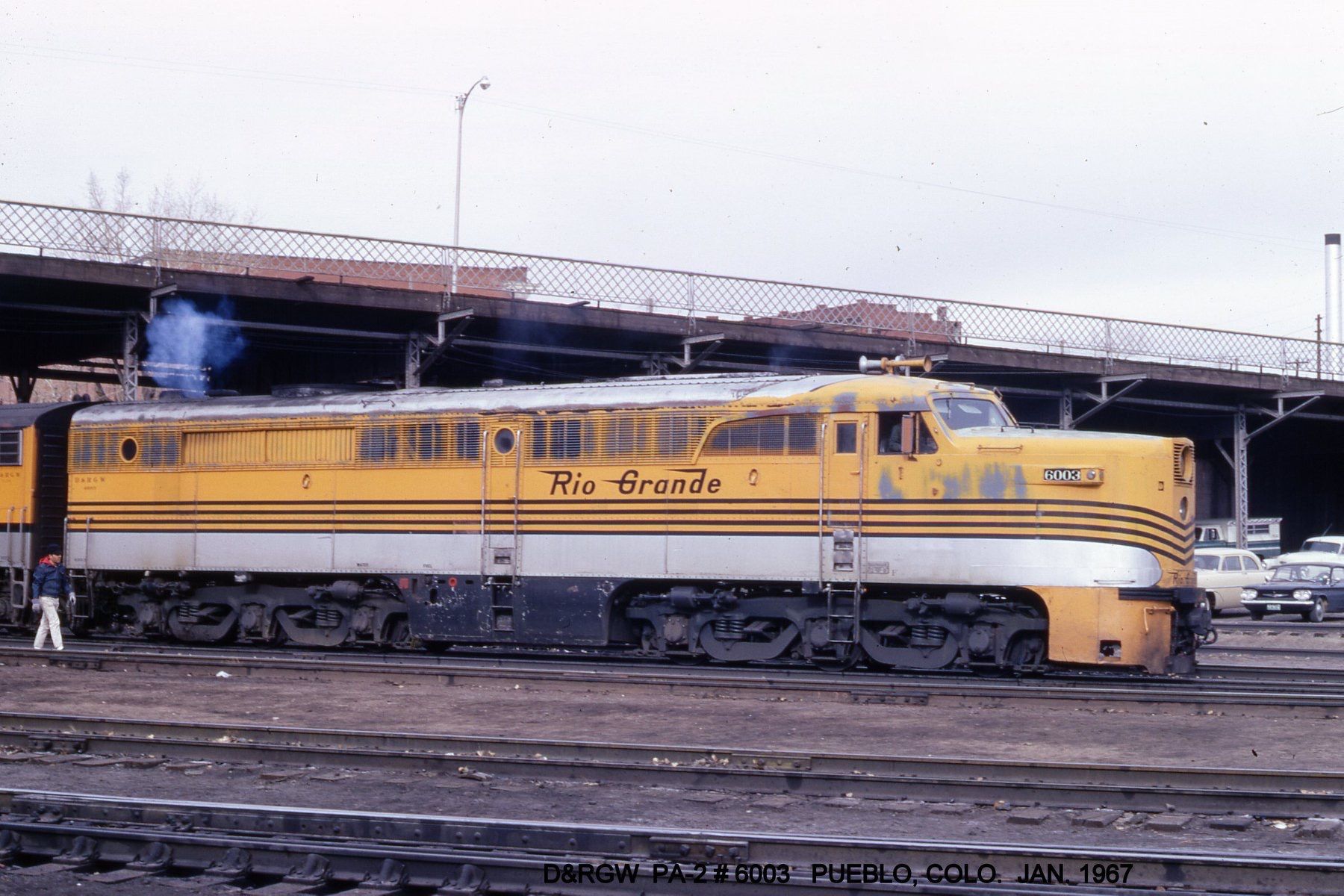
Here’s Rio Grande PA-2 #6003, 1967. In the last collection, we looked at a few diesels that replaced the streamliners. PA-2s were good candidates for upgrading passenger motive power.

Nice looking shot of a PRR I-1 Decapod, 2-10-0. I checked the roster and concluded that this is likely #4308. We had discussed the long fixed wheelbase of Decapods a couple meetings ago. So…Danny – here’s a great example!

Speaking of long wheelbase, looks like this cab forward just fits on the turntable. I couldn’t pick out the number, nor class, but we can assume this is a Southern Pacific facility somewhere. Lotsa Vanderbilt tenders – probably most or all oilburners.

Sumter Valley Ry (Baker County, Oregon) #19 is a beautiful narrow gauge (3’) Mikado. I’m not sure if you call that a diamond stack or something else. This loco was operating in the late 1990s for the scenic railroad named the same as the original – Sumter Valley Ry. Note the boards on the side of the tender fuel bin so the fuel wood could be stacked higher.
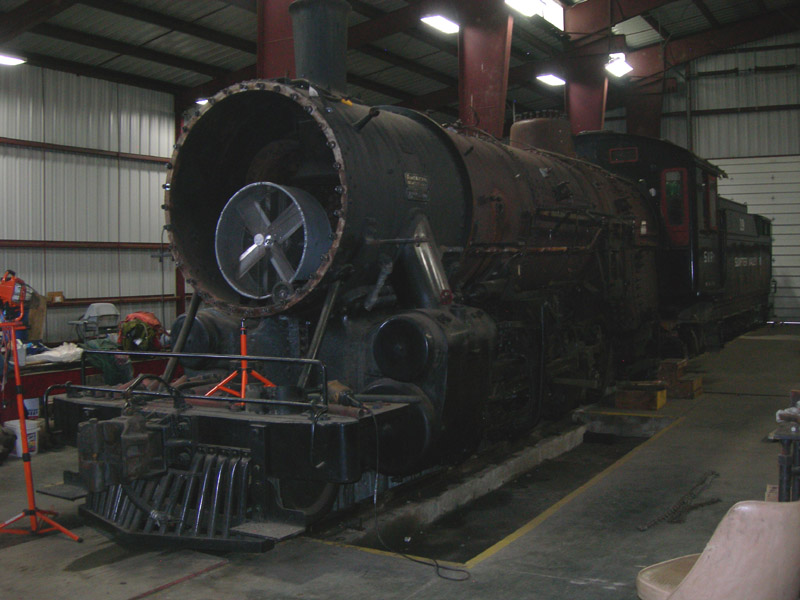
This is #19 undergoing boiler re-certification work in 2012.

The Sumter Valley Ry was founded in 1890 as a logging railroad. The line hauled logs to the Oregon Lumber Co. sawmill in Baker City. (The railroad and the sawmill were two different companies controlled by the same owner.) In 1939 the railway purchased two 2-6-6-2T Mallet locomotives from the Uintah Railway in Colorado. (You see models of these logging mallets, but I don’t know much about their history.) These engines were converted from coal to oil burners and given tenders from two 2-8-2 locomotives. (It doesn’t look like #19 lost its tender!) As traffic declined, the railway sold off the other, unneeded locomotives. In 1947, the railroad ceased all operations except for 1.5 miles of track in the Oregon Lumber Company yard in South Baker City. This last section was abandoned and removed in 1961. In 1971, a group of volunteers set out to rebuild the Sumpter Valley Railway.

Locomotive No. 3, a 1915 Heisler, was restored to operation in 1976, and the new railway opened for business on July 4, 1976 (USA bicentennial), over a track of less than 1 mile. The Sumpter Valley Railroad Restoration Inc. was created and 6 miles of track were reinstalled by hand over the next 15 years, to connect the McEwen, Oregon station with Sumpter, Oregon.

SVR No. 19, the 2-8-2 steam locomotive we saw above, was built in 1920 and was restored to operating condition in 1996. Sister locomotive #20 is also located at the railroad.
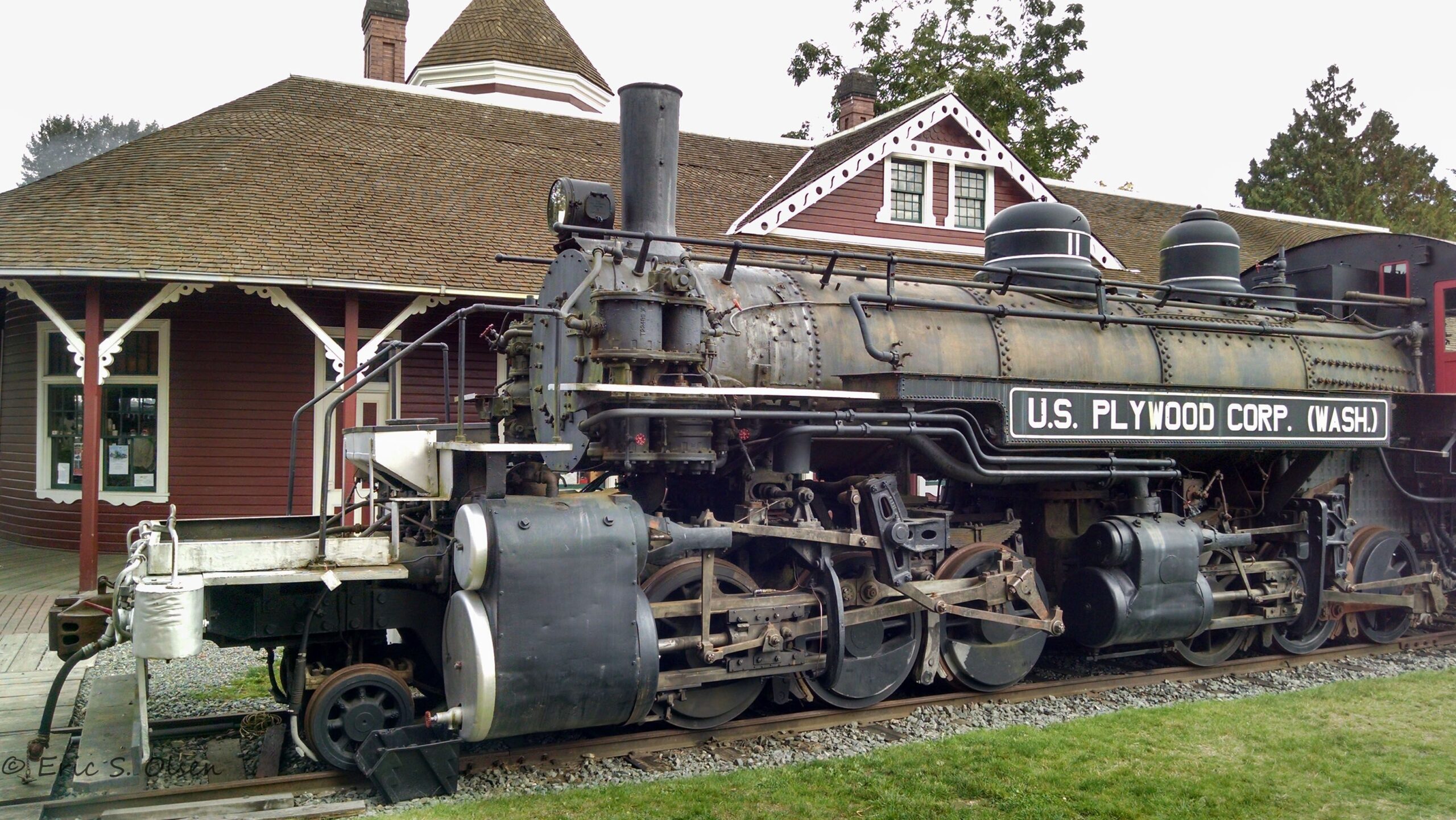
Going back to the logging mallets, Baldwin 2-6-6-2 compound Mallet manufacturer #5970, was built in 1926 for the US Plywood Corp in Snoqualmie, WA.. Under US Plywood, it was numbered #11
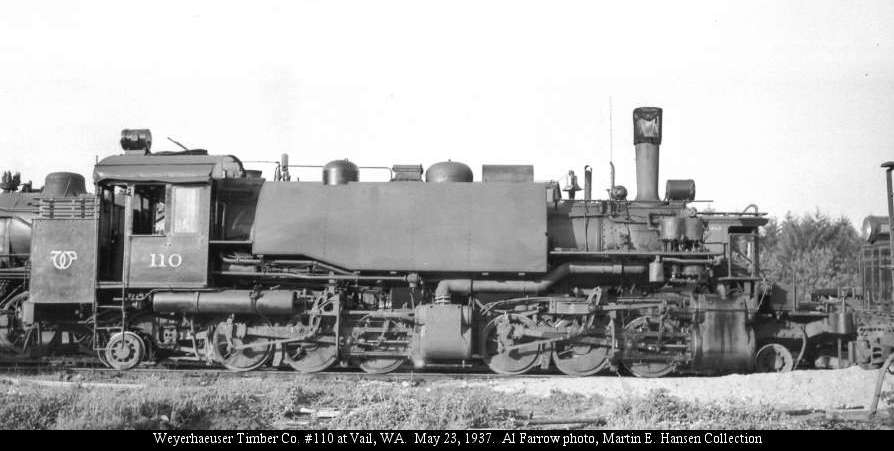
Similar to the Uintah mallet, Weyerhaeuser #110 was also a saddletanker, 2-6-6-2T.

Nothing – just a great shot of 8 Americans (I assume) with diamond stacks, all peeking out of the roundhouse. Note: the third one from the left is just a touch shorter with a different pilot. Nice wooden roundhouse.
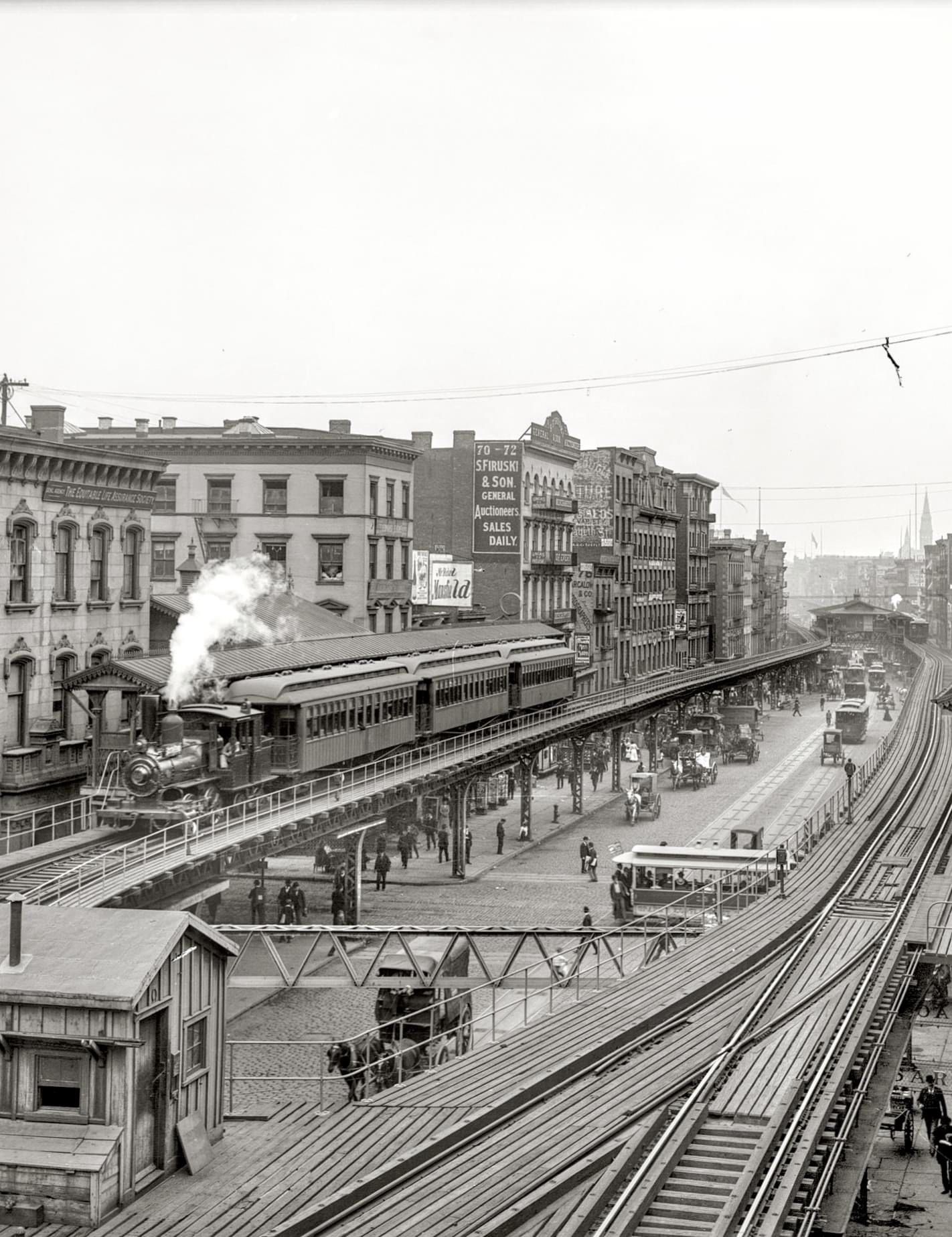
New York City – era?: Steam locos still pulling commuter trains, and a lot of horse drawn buggies and wagons.
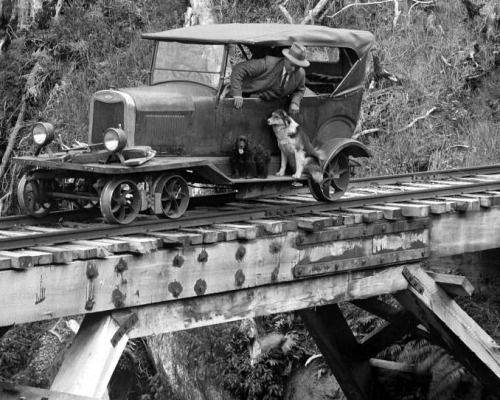
ice inspection vehicle. Are the two dogs on the sideboard the inspectors?

This photo is from Michigan in the early 1900s. The train, an “excursion logging train,” makes a stop during a jaunt through Harbor Springs in 1906. Check out the early 20th century outfits – there are some seriously impressive hats in this photo. And the loco – that’s a Shay. Looks like a mini-narrow gauger.
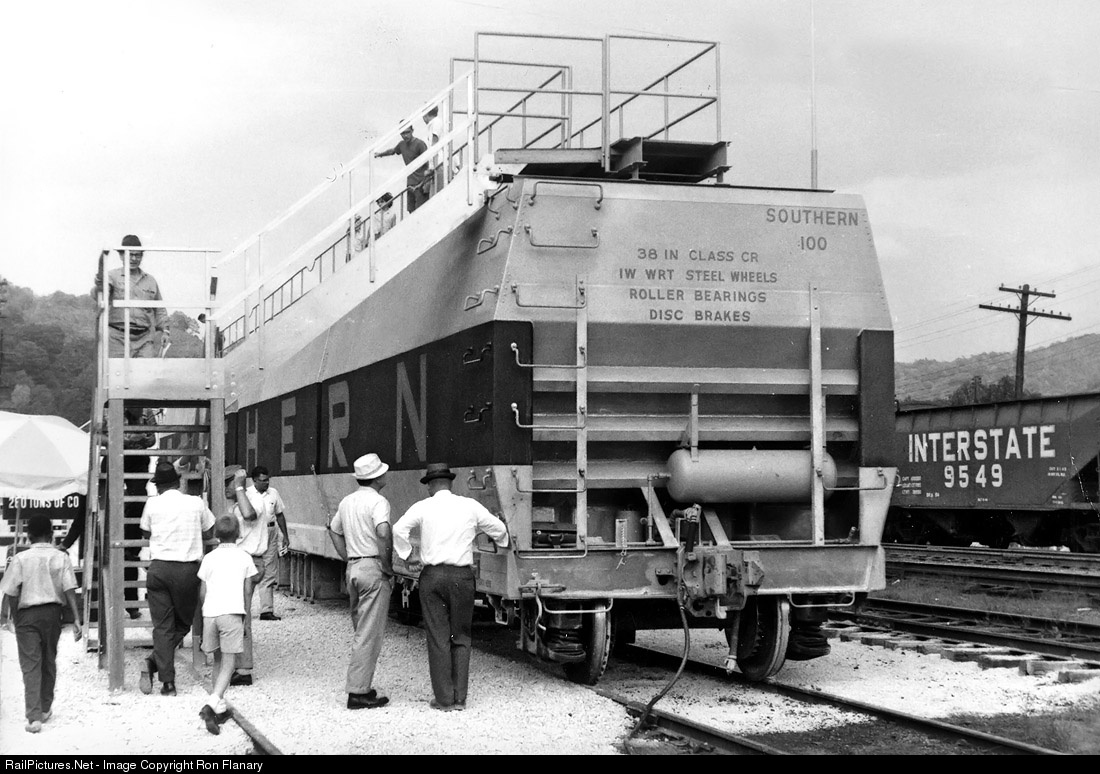
Caption: “Southern’s ‘Quad Hopper’–Number 100–is part of a display of freight equipment at Appalachia, VA in 1965. Number 100 was a one-of-a-kind experimental articulated car with four permanently coupled hoppers, each with single axle wheels on either end (or eight axles for the entire car). The car was constructed of aluminum, which was a favorite material for railroad car construction at the time (to reduce tare weight). Special walkways were constructed to allow visitors to see the horizontal doors (open in this view). Alas, the 100 was not a candidate for duplication.”
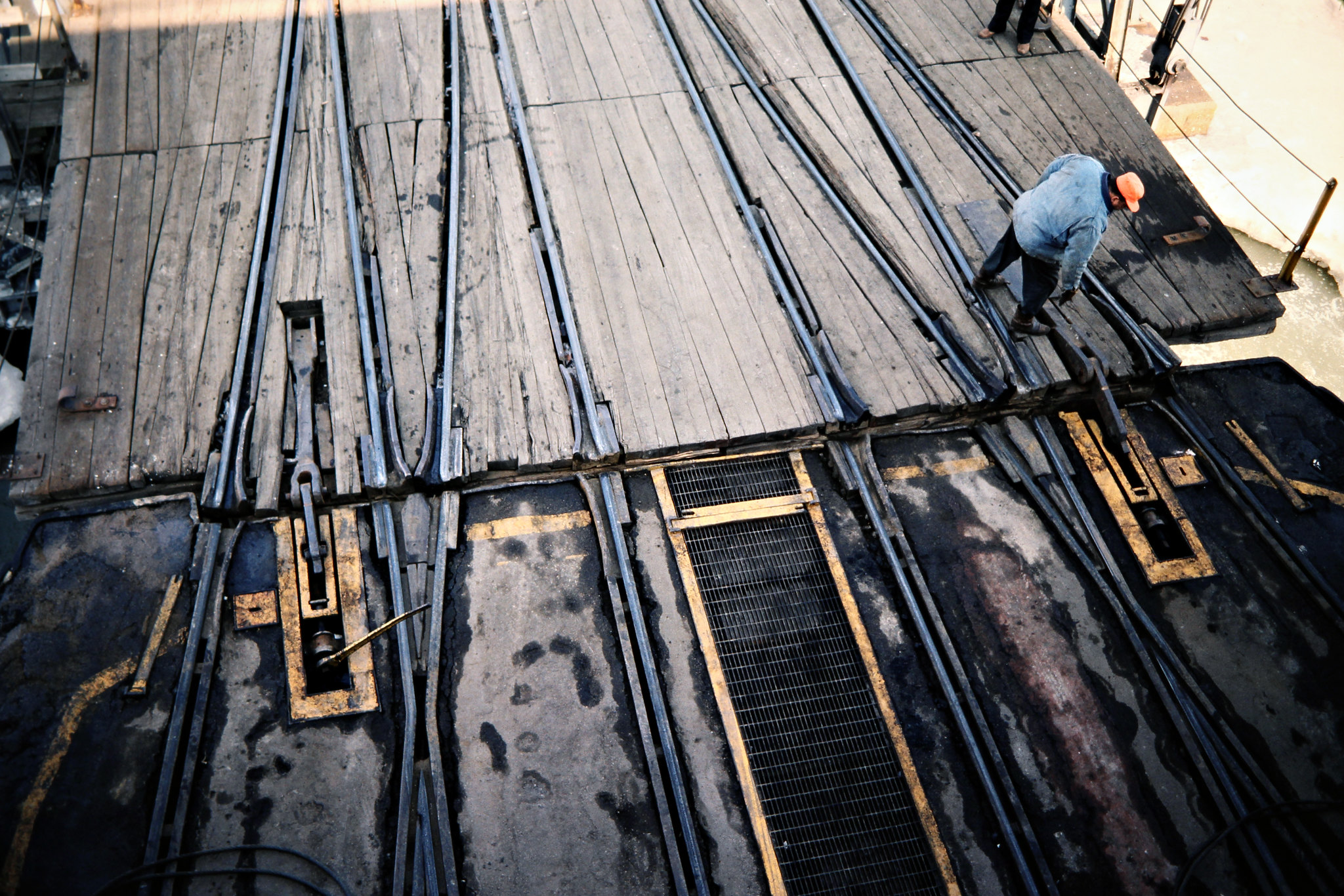
This is a pic of a C&O ferry in Kewaunee, WI, Feb 1982, John F Bjorklund, Center for Railroad Photography and Art. The wood deck is the dock side, and the asphalt paved deck is the ferry. Note the two lock-in levers. The left one is locked and the deck and tracks are aligned on that side. The crewman is about to lock-in the right side, but you can see a slight difference in the deck levels on this side. Check out the guardrails at the gap, and the ends of the frogs.
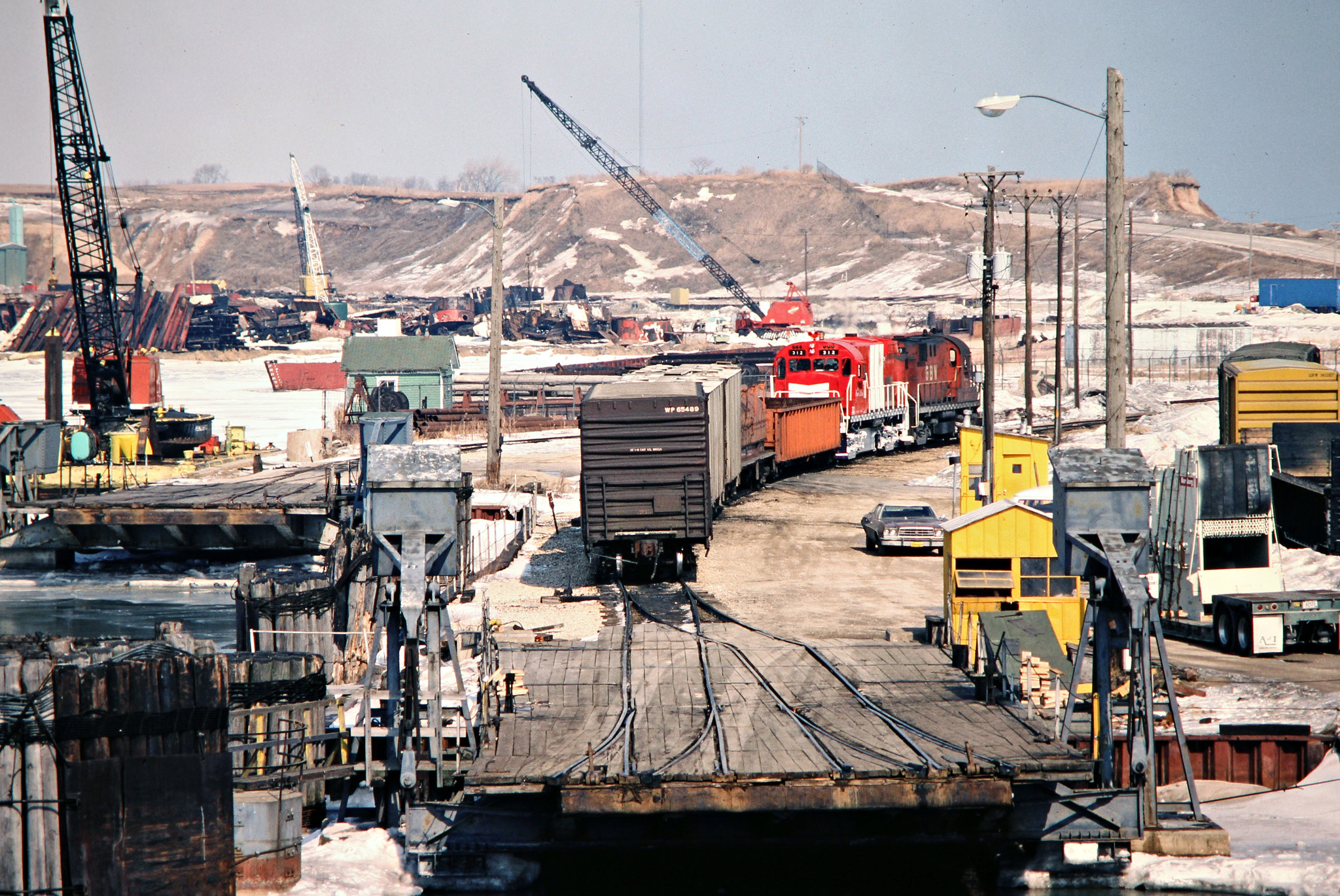
This is a better view of the dock side. I’m not sure what they call those lock in tabs, but they’re both up and leaning in towards the dock. Also, check out the points on the two turnouts. There’s a bit of an inverse “V” in the tracks at the land side of the dock ramp.
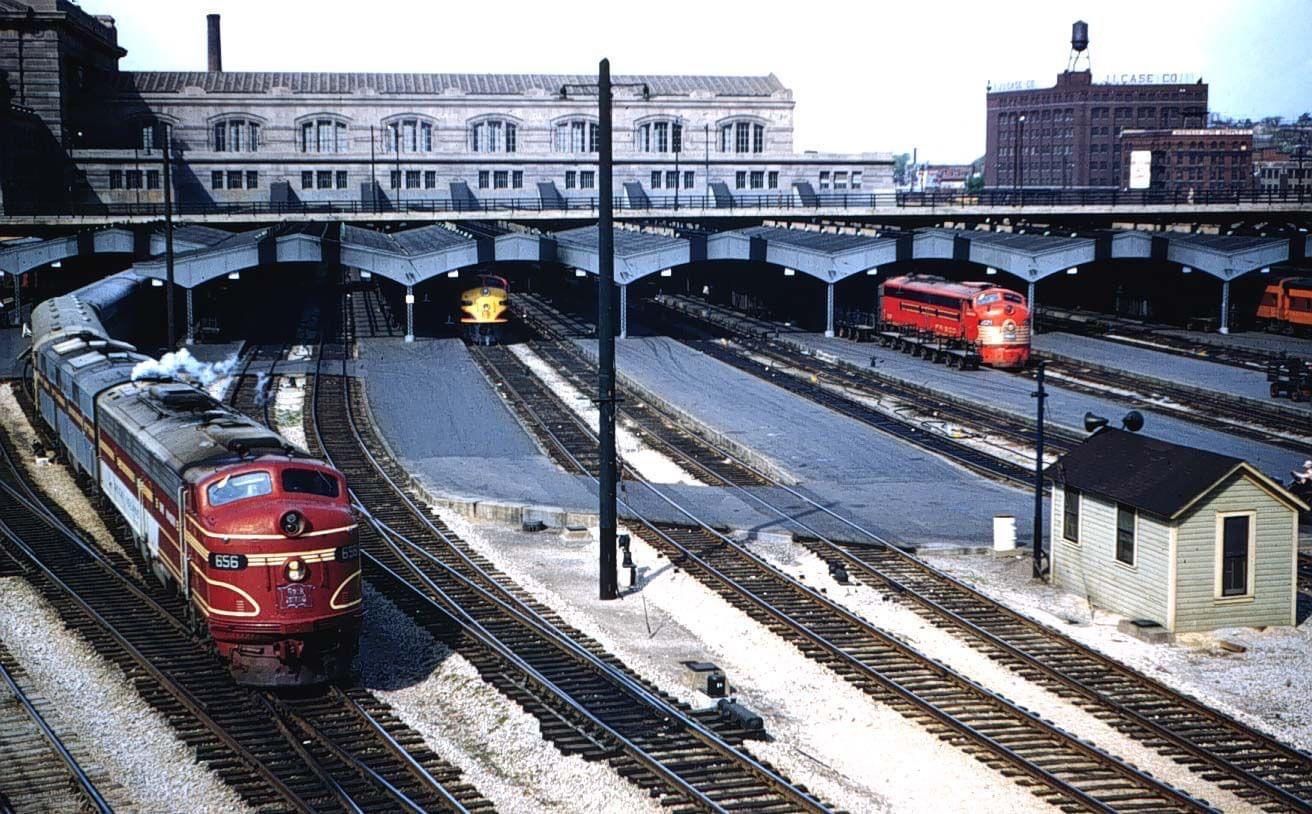
Another nice photo of some station passenger loading sheds. I have no info on this pic, but it looks like the Union passenger station in Kansas City.
Thx,
Kevin

Comments