The H-5 Story 2-8-0 to 2-8-2
In all the annals of steam locomotive rebuilding it is most unlikely that any road ever embarked on a massive program such as the one that saw the conversion of so many New York Central Lines G-5 engines. One of the first ‘system-wide designs, the G-5 class was built continually during the period 1904-1907 for heavy freight service.

Built with piston valves, saturated steam, and Stephenson link motion they must have been eminently successful as there were 595 running by 1907. Later sub-classes sported Walschaert valve gear. The same basic engine, but with Walschaert gear, now became Class G-6 and 382 of those rolled out of the builders between 1907 and 1910. One early sample was even equipped with Cole super heater. As was the policy those days, later G-6 engines equipped with super heaters were G-16 and 24 were built to close out the class.
By 1911 the Lines were faced with the necessity of rebuilding fireboxes and boilers on the G-5’s and just over-all upgrading them. By then the super-heater was proving its worth along with the introduction of outside valve gear (both the Baker PiMod and Walschaert type) with most new locomotives incorporating these efficient new elements into their design. Various types of compounds heretofore heralded as the wave of the future for steam locomotive design were falling out of favor and being discarded.
Management debated rebuilding the class with outside Walschaert gear, super heaters and outside steam pipes but to have done this would have required new cylinders to accommodate the new gear to best advantage. Further, almost complete new boilers and fireboxes were needed. Thus, having incurred the expense of putting this power on a- par with new equipment it would still fall short of what should result from a like number of Mikado type with their much greater steaming and hauling ability. It would have perpetuated the consolidation as the main freight hauler in a period when the Mikado type had already established a superior reputation.
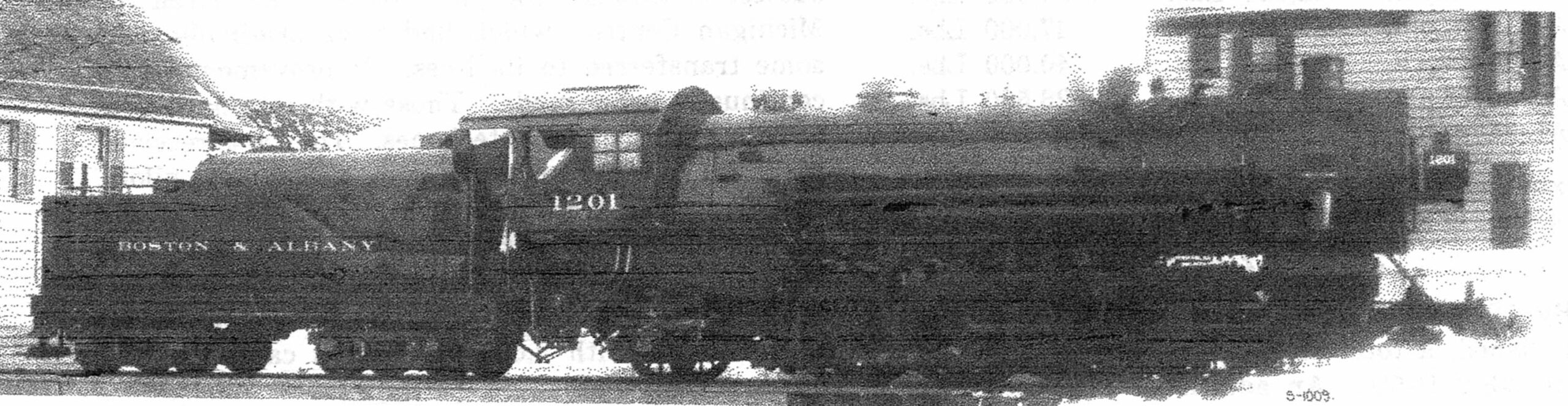
If converted to 2-8-2’s however, they would double the capacity to handle traffic and effect greater economy on a ton-mile basis. Thus it was decided not only to rebuild with modern devices but to convert from 2-8-0’s to 2-8-2’s in the process. The initial job was given to Baldwin and Classes H-5a and H-5b rolled out March, 1912 followed almost immediately by ten H-5c and H-5d engines from ALCO'[s Dunkirk plant. Early trials must have been successful as an order for fifty completely new engines of the same design, designated H-5h, were given to ALCo in July 1912 and turnedover to the Brooks Works at Dunkirk for manufacture. While this was in progress, Schenectady was converting 97 G-5’s to Class H-5e.
The G-5 parts utilized in the rebuilding and conversion were the tenders (7,500 gals/10 Tons), driving wheels, driving axles and boxes (except main ones), main rods, side rods (except rear sections), guides, pilot bumpers, cab fittings, engine truck wheels and axles. Engine main frames were maintained in some cases by piecing out the back and front ends but most were new. Cabs were repaired and maintained except where impracticable in which cases new steel ones were applied. Other accessories such as air brake equipment, injectors and lubricators were usually repaired and reapplied. The new parts incorporated into the engines were the boilers and attendant accessories such as super heaters, fire brick arch grates, ash pan, steam and exhaust pipes, throttle valve, dry pipes and smoke stack. New cylinders were larger (25×32 versus 23×32) and new piston rods and valves were added.
The result of all this improvement gave the Lines’ a locomotive that out hauled the predecessor as shown in the following maximum draw bar pull table:
| 2-8-0 | 2-8-2 | |
| At Start | 47,000 Lbs | 51,000 Lbs. |
| At 5 m.p.h | 42,000 Lbs. | 50,500 Lbs. |
| At 10 m.p.h | 34,500 Lbs | 47,000 Lbs |
| At 15 m.p.h. | 27,200 Lbs | 40,000 Lbs. |
| At 30 m.p.h. | 11,400 Lbs | 26,500 Lbs. |
| At 35 m.p.h. | 8,500 Lbs | 22,300 Lbs. |
Maximum Drawbar Horsepower:
2-8-0 — 1100 at 16 to 22 m.p.h.
2-8-2 — 2100 at 28 to 35 m.p.h.

By 1918, when the entire program had been accomplished, a total of 462 G-5 class engines had become 2-8-2 II-5’s. An additional 179 were built new by Brooks, Schenectady and Lima. The last were a set of five H-5v class in 1924 for the IHB. The G-5 engines not converted to 2-8-2’s were all later improved with Walschaert gear and super heaters and re-classed G-6 in a most curious manner. For instance, G-5k engines became G-6ka. Why they weren’t simply G-5ka, would be conjecture at this late date. Another question might arise as to why the first Mikados were not H-1 instead of H-5. The few remaining 4-8-0 engines on the roster which had been H-1 and H-3 were ready to be written off and had been changed to X4 and X4 (the B&A H-30 had been changed to R-30) thus clearing the H symbol for Mikes. The only explanation we offer is that since they had been G-5, ergo now H-5. This supposition has some credence when it is noted that the next set of Mikados, built new, were classed H-7, not H-6. This could be because there was some thought of converting the G-6 to H-6. Of course, this was never done and the H-6 class was filled a few years later with the equally successful U.S.E.A. light Mikados. One might also ask why these did not become H-I’s, except that the answer will not be forth coming.
The converted and new H-5 engines were most successful through the years on all lines. Even the Michigan Central, which had none originally, saw some transferred to its lines. Improvements were continually being made. Those with original wooden cabs eventually got steel ones. They also received precision reverse, larger air pumps, and valve pilots. Many received trailer boosters. 15,000 gal./18 ton tanks were built new for some, and others got ex-H-10 10,000 gal/16 ton tenders. Most others, that did not get these larger tenders, at least got ex-L.1 tanks with 8,000 gal/14 ton capacity. HT stokers were applied on perhaps 50% and several were equipped with Worthington feed water heaters or exhaust steam injectors.
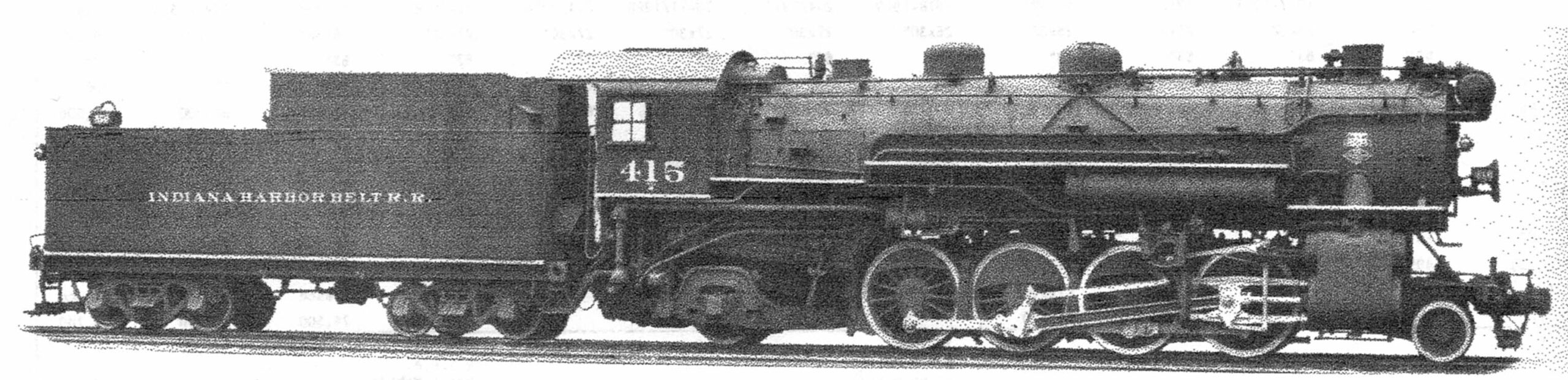
The least service obtained from these rebuilds was about 20 years as it was 1933 before the oldest were retired. On the other hand, some lasted right down to the end, with 21 still on the roster Jan. 1957, the last year of steam. Foreign roads must have liked them too. 37 were sold to various lines in the ’30’s and ’40’s, some winding up on the Atlantic Coast Line via the Atlanta, Birmingham & Coast.
If you were fortunate enough to have spent time roaming engine terminals and freight yards during the great days of steam, and it seemed there were more H-5 engines than anything else, you were absolutely correct. It was the most numerous single class of steam engine the road ever had, 641 in all, far outnumbering its nearest competitor, the U-3 class, which totaled a mere 457 and that figure even includes 2 Rutland engines.
H-6a
Possibly the most successful of all the U.S.R.A. locomotive designs that made their appearance during and immediately following World War I were the light Mikado 2-8-2’s. Only the Administration’s heavy Pacific 4-6-2 exceeded it for good looks. Of the almost 2,000 U.S.R.A. locomotives 625 were light Mikados and came from all three major builders, Lima, Baldwin and ALCo. And the railroad that got the lion’s share of them was the New York Central Lines with 194.
Designated H-6a by the railroad (apparently are building of G-6 engines to 2-8-2 was no longer considered, if indeed, it had ever been) they were assigned to all the various lines and subsidiaries. The NYC itself claimed 95, the Big Four 25, MC 20, T&OC 15, LE&W 15 and the IHB 24. The B&A alone seems to have missed out. Those of the LE&W went along with that road when it was sold to the Nickel Plate and those of the IHB were reassigned to the Frisco and Pere Marquette while 11 of the original NYC’s were transferred to the Pere Marquette and ultimately to the C&O. Thus 144 remained on the NYC and subsidiaries after these transfers and sales. Not included in these totals are 6 that were operating on the NYC controlled Rutland.
For proof of their success one need only know that in 1951, when dieselization was already in high gear, 134 of these locomotives were still in service, lasting long enough for many to get renumbered into the 6300 6400 series. Still further testimony to the superior design of this light 2-8-2 is afforded by noting that through the years of service practically no improvements were made other than an early application of automatic stokers. Many had their combustion chambers removed and a few were equipped with thermic syphons. Only one engine, 5153, was booster equipped and sported an Elesco FWH.
Perhaps the finest tribute one could pay to this fine U.S.R.A. locomotive, NYC Class II-6a, was paid by the railroad itself — it never New York Centralized it. It kept its original appearance in almost all respects to the bitter end. This end came when the last five in service, 6306. 6344, 6352, 6396 and 6412 were retired May, 1956.
Class H-7
About the time of the great G-5 to H-5 conversion program the LS&MS placed an order for brand new, built from the ground up, 2-8-2 locomotives, Class designation H-7a. This first order for 20 locomotives in September 1912 (Brooks Order B-1319) were given road numbers 4000-4019 and set the stage for what ultimately became a system design which totaled 130 locomotives. They were built in classes through H-7e, seeing service on the Michigan Central, Big Four, and old Lake Shore.
Built for heavy freight service, then being handled by super heater consolidations, they showed an increase of 22 1/4% in tractive effort and an increase of 357( in tonnage rating) in main line work, 4,300 to 3,200. Several new features of a minor nature were included in the original design. These were the MacBain (named for LS&MS Supt. of Motive Power Donald MacBain) auxiliary lubricator valve, Franklin pneumatic fire doors, feed water connections, cold water sprinklers, radial buffers, new water glass shield and very long main driving boxes. Many of the principal parts were constructed of vanadium steel including the main frames, driving axles, driving springs, tender truck springs, main and side rods and piston rods. The use of this alloy allowed additional strength without increased weight.
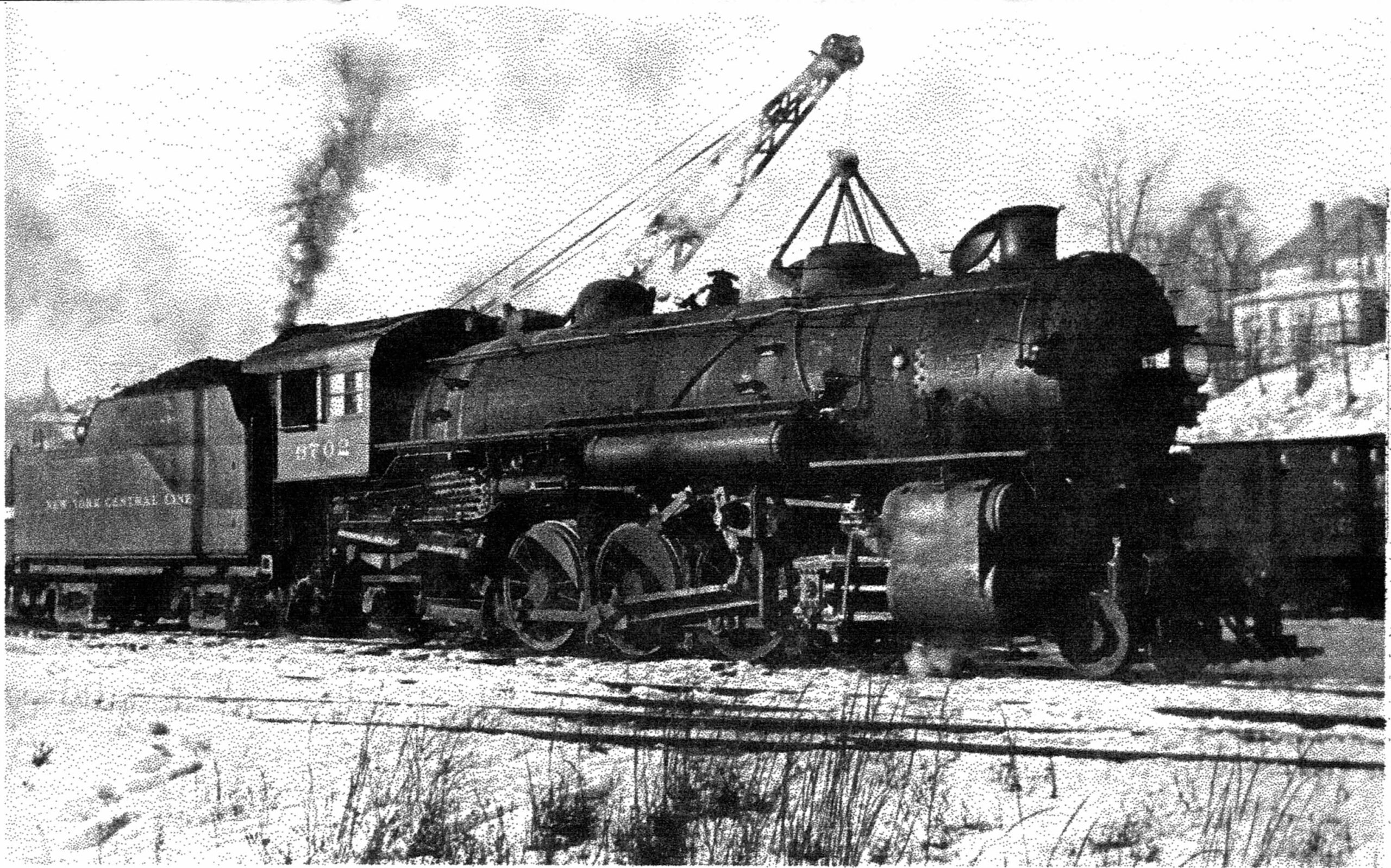
Improvements as the years went by were trailing truck boosters, Elesco or Worthington feed- water heaters and automatic stokers of various types. Of the 130 11-7’s built; 35 were for the LS&MS, 45 for the Michigan Central and 50 for the Big Four. 25 of the LS&MS engines later were transferred to the M.C. Five H-7e class engines were among the last remaining steam to be retired in 1959.
Class H-10
The forerunner of Lima SuperPower of the mid-1920’s made its initial appearance in the form of an experimental 2-8-2, No. 8000, Class H-10 in May 1922. That its performance met and exceeded expectations can be attested to by the fact that it was followed by 301 more of similar design that saw service on all the Lines of the New York Central, unusual in itself.
Few locomotives at the time created as much interest as No. 8000 when it was tested in service between Detroit and Toledo and Toledo and Jackson. It had been planned as an improved type to the highly successful Class 11-7 then performing in heavy freight service. The last of this series, Class H-7e, was a very well designed Mikado and the task of effecting improvement over it while not exceeding allowable weight limits was not an easy one. However successful it was, the H-10 became a mainstay of slow and heavy freight movements until the waning days of steam.
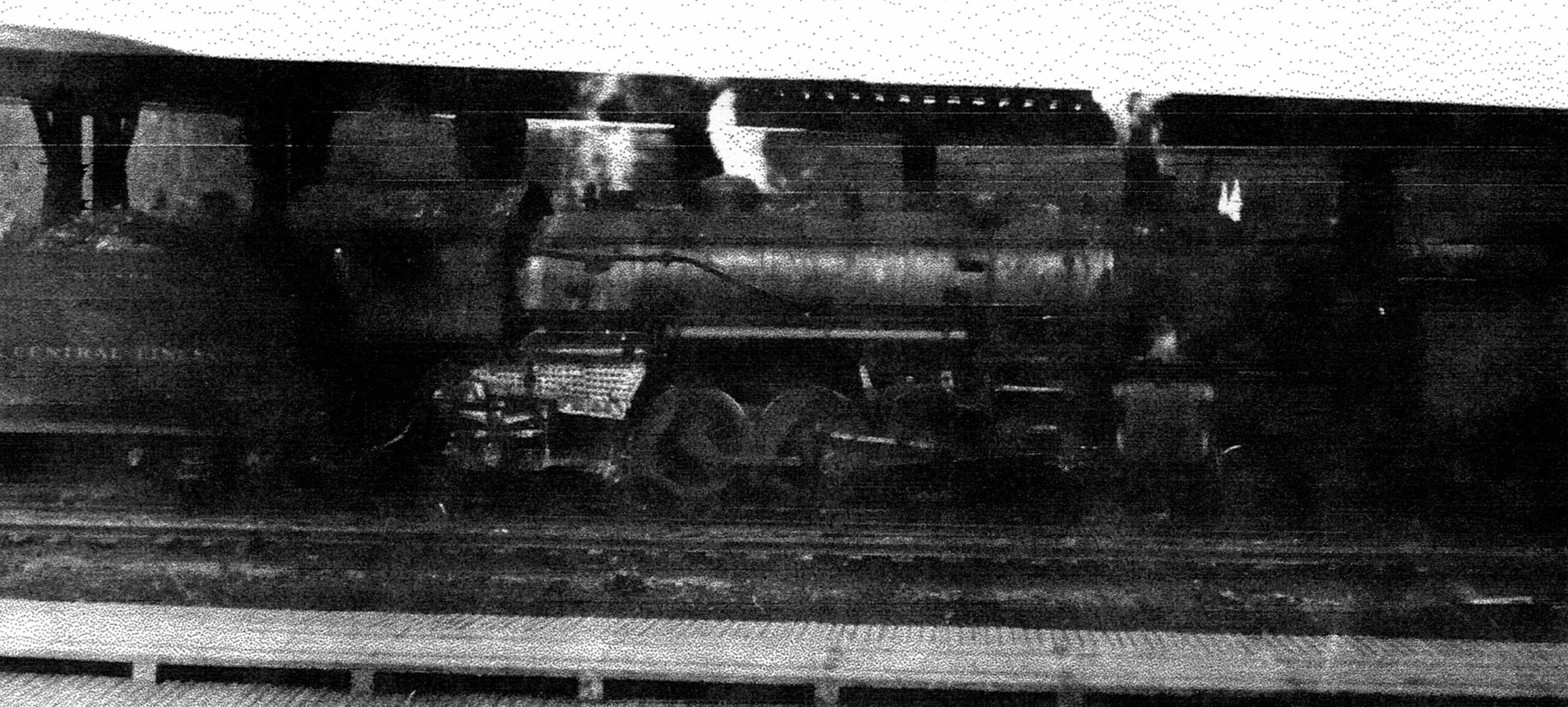
With an increase of only 1.8% in total weight, the maximum tractive force without booster had been increased 7.6% and 26.3% with booster. The weight per cylinder horsepower had been decreased 5.1%. This and greater draw bar output for fuel consumed made the H-10 a highly efficient machine. Cylinders were 28×30″ compared with the 11-7’s 27×30″, boiler pressure of 200 lbs. and 63″ drivers were identical with the H-7.